Spectacle.
A name and a scale nobody can ignore bring the crowd and the press.
Our approach
Why invest in IRL
Gallup, Sept. 2026
Graphite, May 2026
American Alliance of Museums
They still trust what they see with their own eyes. So we put the evidence in front of them, in person, and their phones carried it from there.
Why corruption hides on a screen
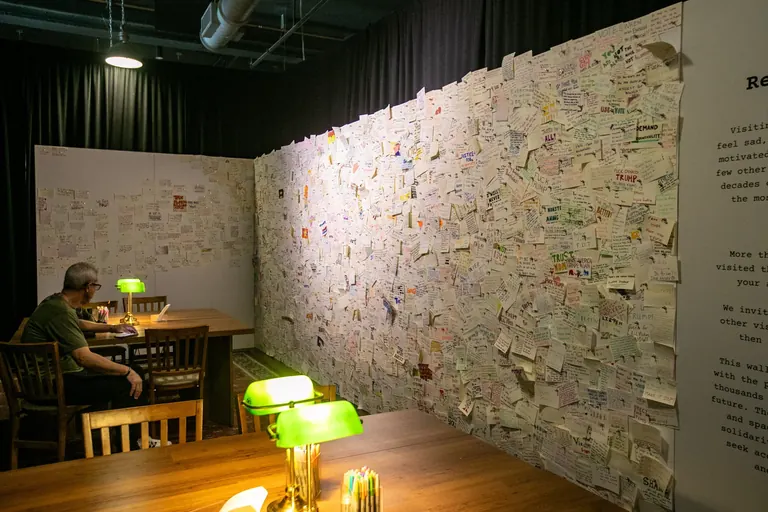
Trump-era corruption runs to thousands and thousands of payments, pardons and purges. The scale is the whole story, and it is the first thing a screen removes. It is hard to see how corruption costs you money. A headline can’t show it. A six-second video can’t. A room full of evidence can.
A museum that travels
Nine in 10 Americans trust museums. But a museum sits in one city, takes years to build and waits for people to come. The pop-up industry solved for that: speed, scale, crowds and a line around the block. We married the two.
How we solve it
A name and a scale nobody can ignore bring the crowd and the press.
The primary documents, shown the way a museum would show them.
Every visitor leaves with something to do, and films it.
The flywheel
(evidence too big to swipe past)
(press, creators and visitors film it)
(real people outperform ad spend)
(the next city already knows we are coming)